
Minimalism has become one of the most influential design movements in modern interior architecture. Clean lines, uncluttered spaces, natural materials, and thoughtful details now define luxury more than excessive decoration. Homeowners are increasingly moving away from heavily ornamented interiors and embracing spaces that feel calm, refined, and intentional.
At first glance, marble inlay may seem like the opposite of minimalist design. Many people associate marble inlay with grand palaces, intricate floral patterns, and traditional craftsmanship. However, modern designers are redefining how this centuries-old art form is used. Today’s marble inlay is no longer limited to elaborate decorative motifs. It can be subtle, contemporary, and perfectly suited for modern homes.
When thoughtfully designed, marble inlay becomes an elegant architectural detail that enhances a space without overwhelming it. Whether incorporated into flooring, feature walls, furniture, or decorative accents, minimalist marble inlay offers a unique way to combine craftsmanship with contemporary aesthetics.
Understanding Marble Inlay in Modern Design
Marble inlay is a decorative stone art technique where carefully cut pieces of marble, natural stone, brass, or semi-precious materials are embedded into a marble surface to create patterns and designs. Traditionally, these designs were highly detailed and inspired by nature, architecture, and cultural motifs.
Contemporary interior design has transformed the way marble inlay is used. Instead of complex compositions, modern applications focus on simplicity, precision, and balance. Designers now use marble inlay to create understated visual interest rather than dramatic ornamentation.
The result is a design element that feels sophisticated without appearing excessive.
Why Minimalist Interiors Are Embracing Marble Inlay
Minimalism is often misunderstood as the absence of decoration. In reality, it is about making intentional design choices and prioritizing quality over quantity.
This philosophy aligns perfectly with marble inlay craftsmanship.
A minimalist room may contain fewer decorative elements, but every detail carries greater importance. Flooring, walls, furniture, and architectural finishes become focal points because there is less visual competition within the space.
Marble inlay introduces texture, artistry, and personality without adding clutter. A simple geometric pattern integrated into a marble floor can have a greater impact than multiple decorative accessories scattered throughout a room.
For homeowners seeking individuality, marble inlay provides a way to personalize interiors while maintaining a clean and modern appearance.
Can Marble Inlay Really Be Minimalist?
Absolutely.
Minimalist marble inlay focuses on restraint rather than complexity. The design relies on proportion, symmetry, and material contrast rather than excessive detailing.
Characteristics of minimalist marble inlay include:
- Clean geometric shapes
- Thin border detailing
- Limited colour palettes
- Monochromatic marble combinations
- Brass line accents
- Large-scale patterns with open space
- Subtle contrast between materials
Rather than filling every inch of a surface with decoration, minimalist inlay uses negative space strategically. This creates a sense of balance and sophistication that complements contemporary architecture.
1. Use Marble Inlay to Create a Refined Entrance
The entrance sets the tone for the entire home.
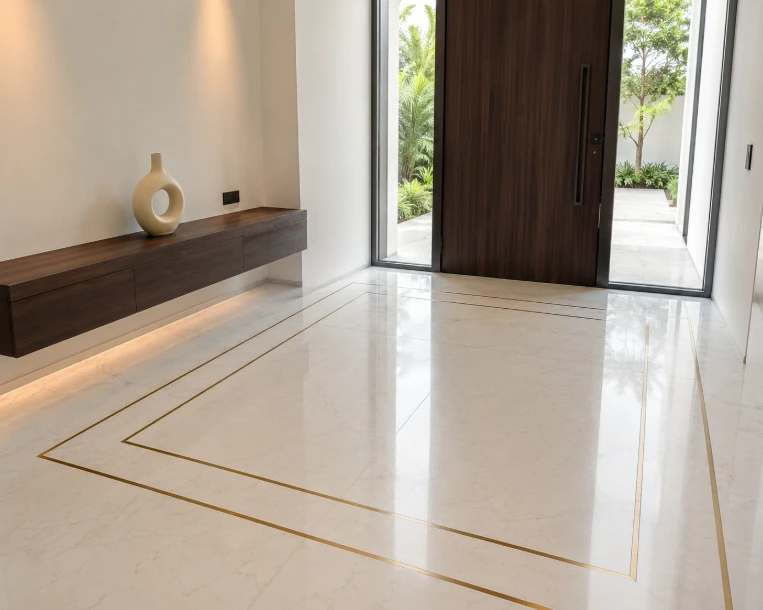
In contemporary residences, oversized medallions and ornate patterns are often replaced with cleaner, more architectural designs. A simple circular inlay, a geometric composition, or a subtle brass detail can create a memorable first impression while maintaining a minimalist aesthetic.
The key is to let the quality of the materials speak for themselves. White marble combined with delicate grey stone detailing can create a striking yet understated entrance that immediately communicates luxury.
2. Introduce Geometric Patterns in Living Spaces
Geometric design is one of the defining characteristics of contemporary interiors. Straight lines, symmetry, and structured layouts naturally complement modern architecture. Simple geometric designs can be used to:
- Define seating areas
- Highlight architectural features
- Create visual movement
- Add depth to open-plan layouts
Large-format marble paired with subtle geometric inlay often creates a more impactful result than highly decorative flooring.
3. Embrace the Beauty of Minimal Borders
Borders have long been used in marble flooring, but contemporary designers are approaching them differently.
Instead of elaborate decorative edges, modern border designs focus on precision and restraint.
Thin marble strips, brass lines, or contrasting stone borders can frame a space beautifully while preserving a clean overall appearance. This approach works particularly well in luxury apartments, penthouses, and modern villas where architectural clarity is important.
4. Create Elegant Dining Room Statements
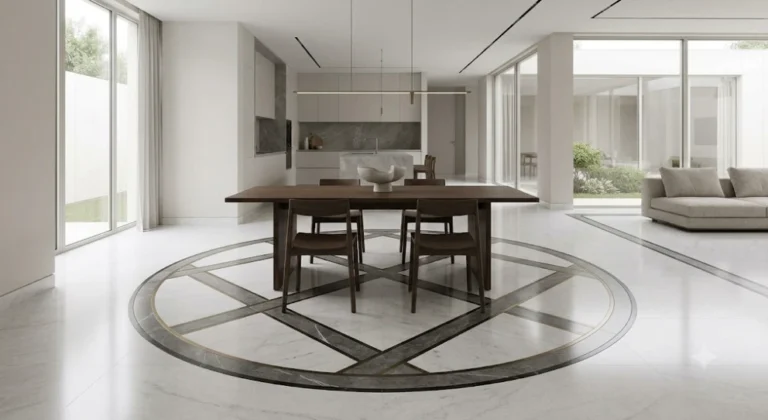
Dining rooms provide an excellent opportunity for marble inlay because furniture placement naturally defines the focal area. A subtle inlay design beneath the dining table can anchor the space and create visual harmony without competing with other design elements. Many contemporary homes use:
- Circular geometric layouts
- Soft curved patterns
- Brass-accented marble designs
- Monochromatic inlay compositions
5. Rethink Marble Inlay for Pooja Rooms
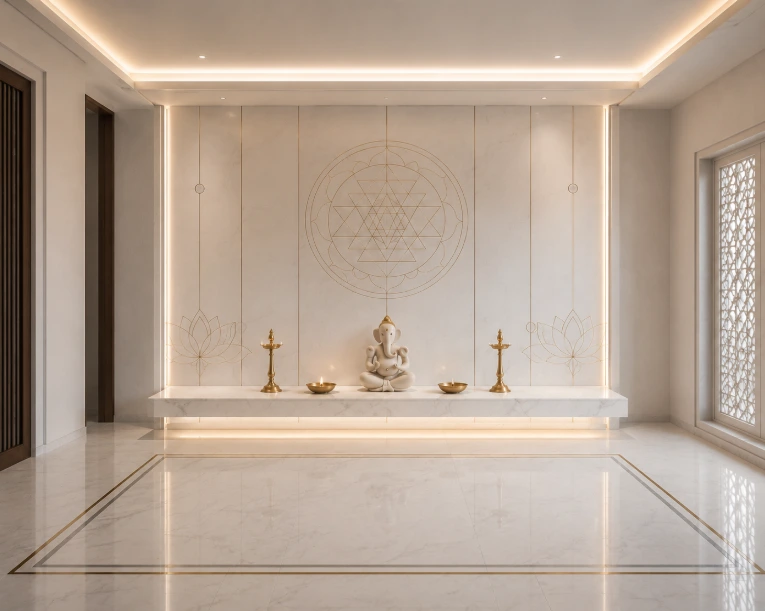
Modern pooja rooms are becoming increasingly minimalist. Instead of heavily decorated spaces, many homeowners now prefer spiritual environments that feel peaceful and uncluttered.
Minimalist marble inlay works beautifully in this setting. Simple lotus outlines, sacred geometry patterns, Om symbols, and subtle spiritual motifs can be incorporated into flooring or wall panels without overwhelming the room.
The result is a space that feels both meaningful and contemporary.
6. Marble Inlay Feature Walls
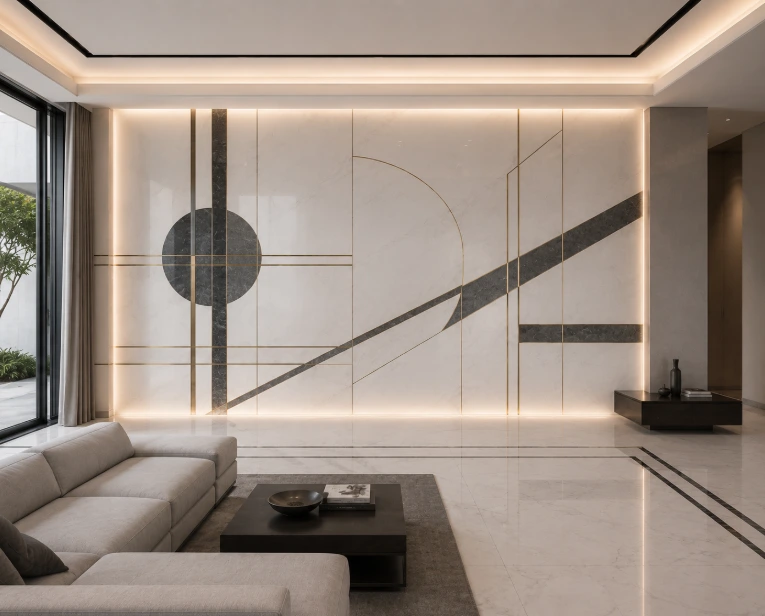
Contemporary interiors often rely on a few carefully selected focal points rather than multiple decorative elements. Marble inlay feature walls have emerged as an elegant alternative to traditional artwork, allowing homeowners to introduce texture, craftsmanship, and luxury directly into the architecture.
Feature walls work particularly well in:
- Living rooms
- Entrance lobbies
- Dining areas
- Hotel reception spaces
- Master bedrooms
- Pooja rooms
When paired with concealed lighting, the intricate details of the inlay become even more striking, creating a refined and contemporary atmosphere.
7. Custom Marble Furniture with Minimalist Inlay
Marble inlay is no longer limited to flooring and walls. Designers are increasingly incorporating it into furniture to create cohesive luxury interiors. A marble inlay coffee table or dining table can introduce craftsmanship without requiring large-scale installations. Because the furniture itself becomes a decorative feature, the rest of the room can remain simple and uncluttered.
Popular applications include:
- Coffee tables
- Dining tables
- Console tables
- Side tables
- Reception desks
Minimalist furniture inlay often uses clean geometric lines, subtle stone contrasts, or delicate brass detailing rather than traditional decorative motifs.
Best Marble Combinations for Minimalist Interiors
The success of minimalist marble inlay depends heavily on material selection. Contemporary interiors typically favour restrained colour palettes and subtle contrasts.
White-on-White Marble Inlay
One of the most sophisticated approaches is combining different shades of white marble. Thassos, Makrana, and Vietnam White Marble can be used together to create patterns that are visible through texture and tone rather than strong colour contrast.
Black and White Contrasts
Monochromatic combinations remain a favourite among architects and interior designers. Black marble accents against a white marble background create clean visual definition while maintaining a modern appearance.
Marble and Brass Pairings
Brass has become one of the most popular materials in luxury interiors. Thin brass lines integrated into marble flooring or wall panels add warmth and elegance without overwhelming the design.
Neutral Stone Palettes
Soft grey, beige, and ivory stones work particularly well in contemporary homes where subtle sophistication is preferred over bold visual statements.
Design Principles for Contemporary Marble Inlay
A minimalist design does not happen by accident. It requires discipline and thoughtful decision-making.
1. Prioritize Simplicity
Complex designs often compete with the architecture of the space. Simple patterns tend to age more gracefully and remain visually appealing for decades.
2. Use Scale Effectively
Larger patterns generally work better in modern interiors than small repetitive motifs. They create visual impact without creating clutter.
3. Focus on Proportion
Every inlay design should relate to the dimensions of the room. Oversized patterns can overwhelm a space, while undersized details may disappear completely.
4. Allow Negative Space
One of the defining characteristics of minimalist design is the strategic use of empty space. Not every surface needs decoration.
5. Coordinate with Architecture
Marble inlay should feel integrated into the design of the property rather than added as an afterthought. The most successful projects align flooring, walls, furniture, and architectural features into a cohesive visual language.
Marble Inlay Trends Shaping Luxury Interiors in 2026
Interior design trends continue to evolve, but several clear directions are emerging within the marble inlay industry.
- Ultra-Minimal Geometric Patterns: Simple geometric layouts remain among the most requested design styles for contemporary homes.
- Brass Line Inlays: Fine brass detailing is increasingly replacing more elaborate decorative elements.
- Organic Shapes: Designers are experimenting with softer curves and flowing forms inspired by nature.
- Personalized Luxury: Custom monograms, family emblems, and bespoke artwork are becoming increasingly popular among homeowners seeking exclusivity.
- Seamless Flooring Concepts: Many luxury homes now use subtle inlay details that flow naturally across large floor areas rather than relying on isolated decorative elements.
Common Mistakes to Avoid
A successful marble inlay design is about balance. Avoid overly complex patterns, excessive material combinations, and trend-driven designs that may quickly feel outdated. The inlay should work harmoniously with the room layout, furniture placement, and architectural style. Selecting the right marble and design together helps create a timeless and elegant result.
Why Architects and Designers Prefer Minimalist Marble Inlay
Architects appreciate minimalist marble inlay because it offers design flexibility while maintaining a premium appearance.
Unlike heavily decorative surfaces, contemporary inlay designs can adapt to a wide range of architectural styles, from modern apartments and luxury villas to boutique hotels and commercial spaces.
Minimalist marble inlay also provides long-term design value. While trends may change, clean lines, natural materials, and exceptional craftsmanship remain timeless.
For clients, this means investing in a feature that is likely to remain relevant and visually appealing for many years.
Maintaining Marble Inlay in Contemporary Homes
One of the advantages of marble inlay is its durability. With proper care, it can retain its beauty for generations. A few simple maintenance practices can help preserve its appearance:
- Clean regularly using pH-neutral products.
- Avoid acidic cleaners that may damage marble surfaces.
- Wipe spills promptly.
- Use protective pads beneath furniture.
- Schedule professional polishing when necessary.
Because the decorative elements are integrated into the marble itself, the design remains part of the flooring rather than a surface treatment that can wear away over time.
Conclusion: Minimalism Meets Craftsmanship
Minimalist interiors are often defined by restraint, but restraint does not mean sacrificing personality. In fact, carefully selected materials and thoughtfully crafted details often have a greater impact than excessive decoration.
Marble inlay demonstrates this perfectly. By combining natural stone with precise craftsmanship, it allows homeowners and designers to create spaces that feel sophisticated, timeless, and highly personal.
Whether incorporated into flooring, feature walls, staircases, furniture, or architectural details, minimalist marble inlay proves that luxury does not need to be loud. Sometimes the most powerful design statements are also the most subtle.
For those seeking a balance between contemporary aesthetics and traditional craftsmanship, marble inlay offers a design solution that is both modern and enduring.
